
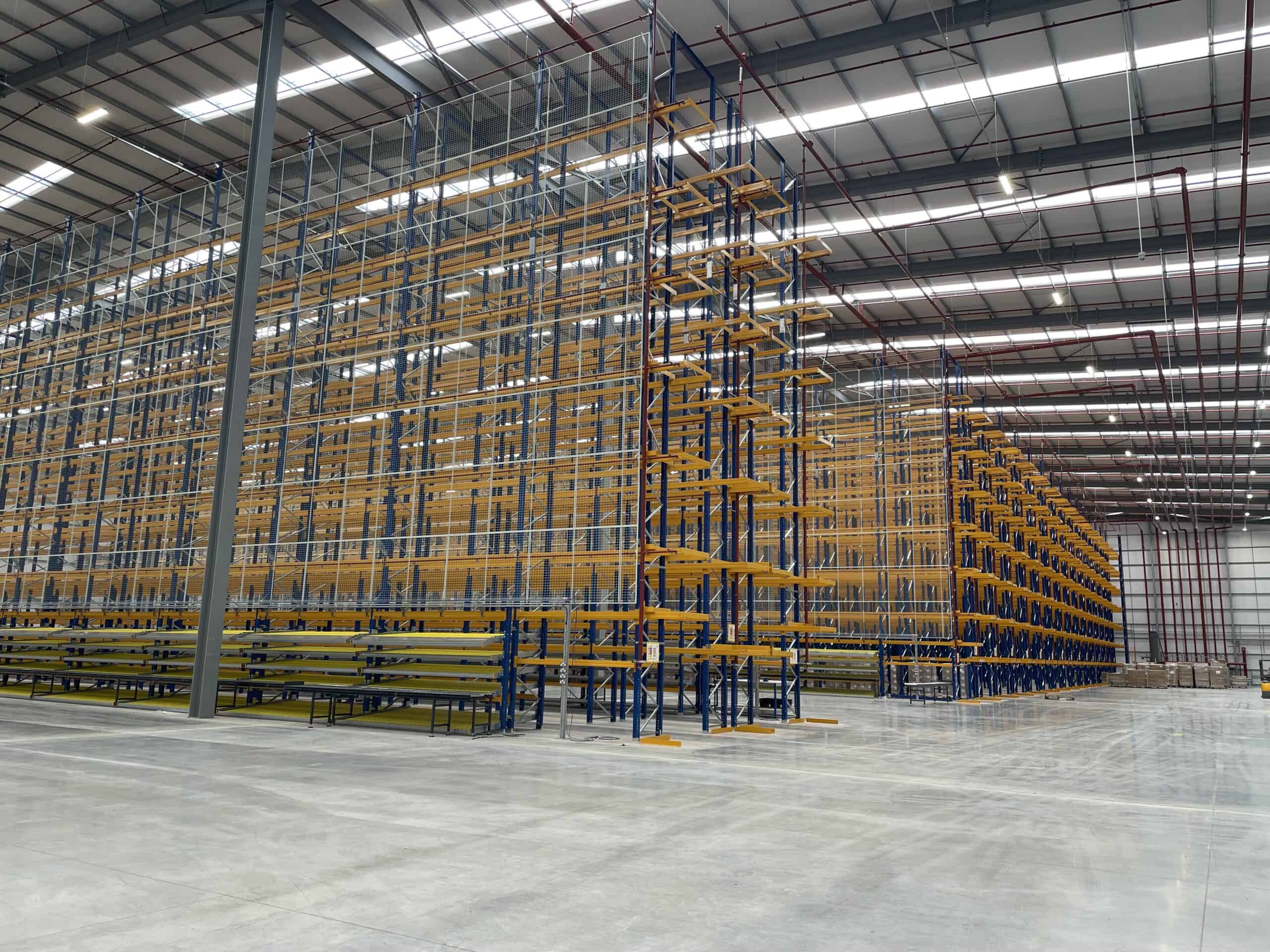
The role of lighting in industrial buildings has changed significantly in recent years. Rising energy costs and stricter rules are changing how we view lighting. It is no longer just a basic utility. There is now a greater focus on efficiency.
People now see smart lighting for buildings in the UK as a system. This system can be controlled and helps reduce energy use. It also supports compliance and long-term cost management.
For warehouses, factories, and large production areas, using LED lights is important. High-efficiency LED lights with smart controls are the best choice. This is now the standard practice in the UK industrial lighting sector.
What Defines Smart Industrial Lighting?
Smart lighting goes beyond replacing conventional fittings with LEDs. It describes a lighting system that connects lights, sensors, and controls. This system provides light only when and where it is needed.
Typical features of UK industrial lighting systems include:
- Networked lighting controls (wired or wireless)
- Occupancy and presence detection
- Zoned and task-based dimming
- Daylight-linked control
- Integration with bus-bar power distribution systems
- Central monitoring and adjustment
When properly designed, these systems reduce waste, improve visual comfort and provide data to support energy management strategies.
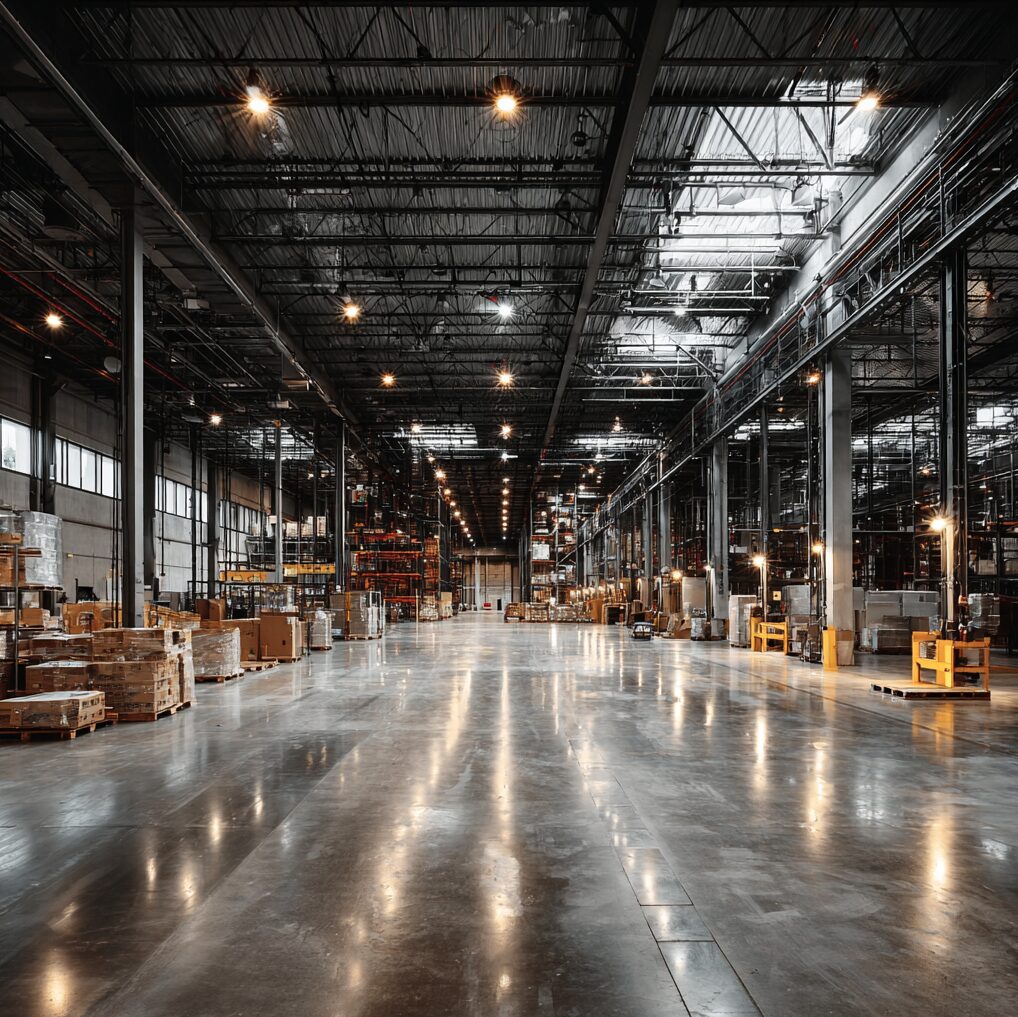
Lighting Controls For Factories & Warehouses
Occupancy and Presence Sensors
In industrial environments, large areas are often intermittently occupied. Warehouse smart lighting systems make extensive use of occupancy and presence sensors to ensure lighting levels respond to actual usage.
Lights can be dimmed or switched off in unoccupied aisles, storage zones or production areas, then instantly return to working levels when movement is detected. This approach delivers substantial energy savings while maintaining safety and productivity.
Dimming and Adaptive Lighting
Dimming is a core component of modern lighting controls for factories. Rather than operating at full output continuously, smart systems adjust light levels based on time of day, task requirements or daylight availability.
In facilities with roof lights or glazing, daylight harvesting enables luminaires to automatically reduce output when sufficient natural light is present, reducing electricity consumption without compromising illumination standards.
Networked Control Systems
Networked lighting control allows individual luminaires or groups to be addressed, monitored and adjusted from a central interface.
This provides:
- Precise zoning across large floor areas
- Scheduling aligned to shift patterns
- Performance monitoring and fault detection
- Integration with wider building management systems (BMS)
For large industrial estates, networked control ensures lighting remains adaptable as operational requirements change.
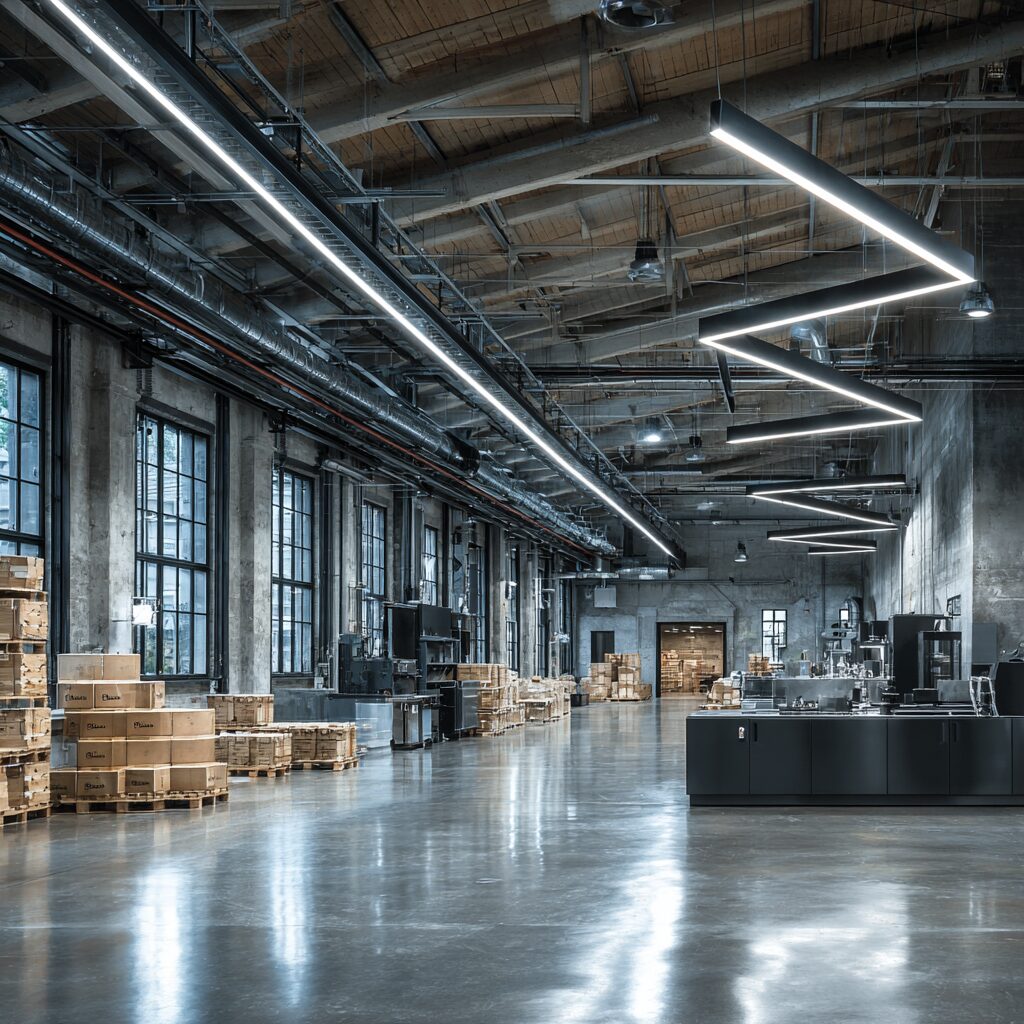
Advanced Smart Lighting Technologies For Industrial Settings
Modern smart lighting isn’t just about LEDs and basic sensors; it’s also about choosing control systems that deliver both energy savings and operational simplicity. Systems like Eco Lighting’s Eco868 smart lighting control platform bring advanced features typically found in expensive DALI or BMS installations into reach for industrial facilities. Eco868 uses wireless linking and in‑luminaire sensors to enable grouped control without additional wiring, drastically simplifying installation across large spaces such as warehouses or production spaces.
It also provides energy monitoring and emergency system reporting, allowing facilities managers to track real‑time usage and quickly identify faults. With tablet‑based configuration and flexible grouping options, smart lighting can be reconfigured easily as layout or operational needs evolve, all while maximising savings and lighting performance.
UK Regulatory & Compliance Considerations
Building Regulations – Part L
Under Part L of the Building Regulations, non-domestic buildings in the UK must meet minimum energy efficiency standards. Smart lighting systems contribute directly to compliance by reducing lighting energy demand through automatic control, zoning and scheduling.
Upgrading to controlled LED lighting is often a practical route to improving a building’s overall energy performance during refurbishment or plant upgrades.
Sustainability and Corporate Targets
Many industrial organisations now operate within broader sustainability frameworks, including carbon reduction commitments and environmental reporting.
Smart lighting systems support these objectives by:
- Lowering energy consumption
- Providing measurable performance data
- Supporting BREEAM and ESG targets
As expectations around environmental responsibility increase, intelligent lighting is becoming a standard requirement rather than an optional enhancement.
Cost Efficiency & Return On Investment
Reduced Energy Costs
With UK electricity prices remaining a key concern for industrial operators, lighting controls offer a reliable and immediate reduction in consumption. Well-designed smart lighting installations commonly achieve energy savings of 40–60% compared to legacy systems.
Lower Maintenance and Longer Asset Life
LED luminaires operated with dimming and occupancy control experience less thermal stress, extending their operational life. Reduced maintenance intervention is particularly valuable in high-bay warehouses and production environments where access can be disruptive and costly.
Future-Proofing Investment
Smart lighting systems provide flexibility. As operating hours, layouts or usage patterns change, lighting can be reprogrammed rather than replaced, protecting capital investment over the long term.
Delivering measurable benefits
Smart lighting for industrial buildings in the UK is no longer driven solely by energy efficiency. It is a strategic investment that supports compliance, operational resilience and cost control.
From warehouse smart lighting systems using occupancy detection to advanced lighting controls for factories integrated via bus-bar infrastructure, intelligent lighting delivers measurable benefits across industrial environments.
Looking for reliable and compliant UK industrial lighting, smart systems are the new standard. Contact Eco Lighting today to find out more.