
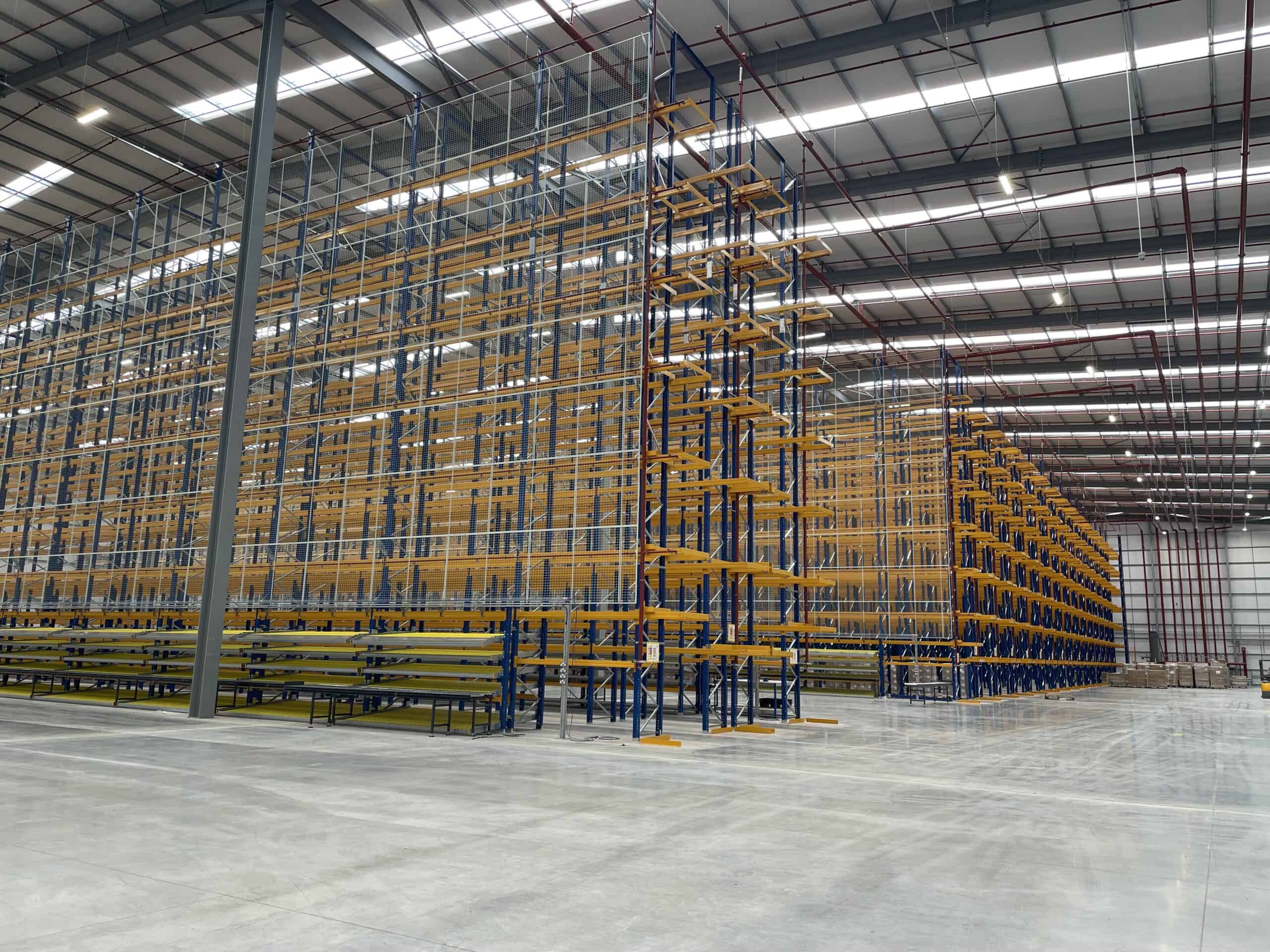
Sustainability is no longer a niche concern within the lighting sector. Across the UK, manufacturers, logistics operators and facilities managers are rethinking how lighting systems are designed, installed and maintained.
For many large sites, including warehouses, factories, distribution centres, and production facilities, lighting is a major ongoing energy cost. It is also one of the clearest opportunities for reducing carbon emissions and improving operational efficiency.
This is where the circular economy is beginning to shape the future of sustainable industrial lighting UK.
Instead of using the old “take, make and dispose” model, the lighting industry is adopting a circular approach. It focuses on durability, repairability, recycling, and long-term performance.
Why Lighting Matters For Industrial Sustainability
Lighting plays a bigger role in environmental impact than many organisations realise. Globally, lighting accounts for around 5% of total CO₂ emissions, making it an important area for improvement when businesses are looking to reduce their carbon footprint.
Industrial facilities rely on large-scale lighting systems that operate for long hours each day. In warehouses and manufacturing environments, lighting can run 24 hours a day, which means inefficient systems quickly translate into high energy consumption.
Replacing outdated fittings with eco-friendly LED lighting can dramatically reduce this demand. Modern LEDs can be up to 80% more energy efficient than traditional lamps while also producing significantly less heat.
For businesses looking to meet sustainability targets or reduce operational costs, lighting upgrades often deliver some of the fastest returns on investment.
Circular Economy Principles In Modern Lighting
The circular economy focuses on keeping products and materials in use for as long as possible. In the lighting industry, this approach is influencing how luminaires are designed, manufactured and maintained.
Instead of treating lighting as a disposable product, circular thinking prioritises:
- Long product lifecycles
- Repairable components
- Upgradeable technology
- Recycling of materials at end of life
This approach helps reduce waste while also lowering the demand for new raw materials. For businesses investing in UK sustainable manufacturing lighting, circular design ensures that lighting systems remain viable for longer and can evolve as technology improves.
Long-Life LED Technology
The foundation of most sustainable lighting strategies is LED technology.
Traditional lighting such as incandescent or fluorescent fittings are inherently inefficient. A large proportion of their energy is lost as heat rather than useful light. By comparison, LEDs convert far more energy into light output, dramatically improving efficiency.
While a typical incandescent bulb may last around 1,200 hours, a quality LED fitting can operate for up to 50,000 hours depending on the application.
In industrial environments this longer lifespan has significant benefits:
- Reduced maintenance requirements
- Fewer replacement lamps entering the waste stream
- Less operational disruption in high-ceiling or difficult-access areas
For warehouse operators and manufacturers, this reliability is just as valuable as the energy savings.
Remanufacturing & Lighting Upgrades
Circular economy thinking also encourages refurbishment rather than replacement wherever possible.
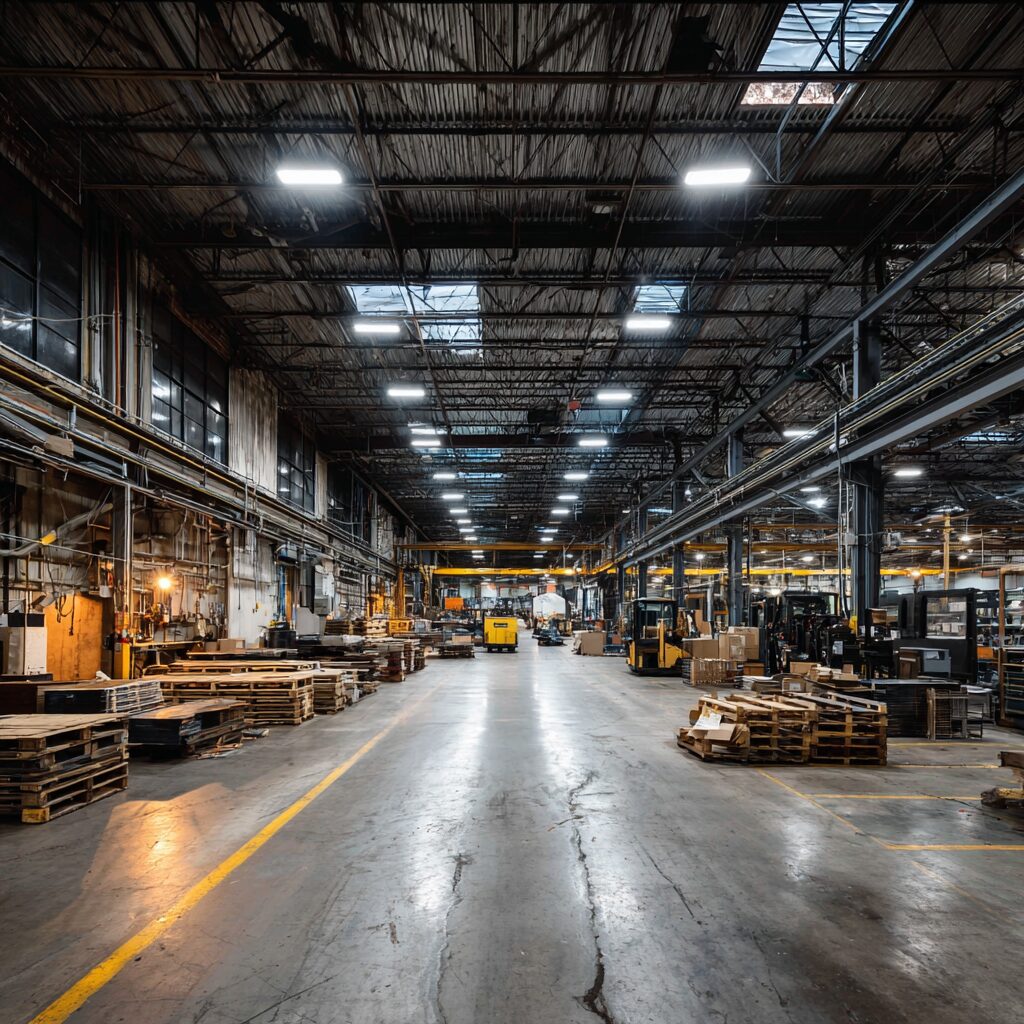
In many cases, existing lighting infrastructure can be upgraded by replacing outdated components with modern LED modules, drivers or control systems. This approach extends the life of the overall installation while reducing the need for entirely new luminaires.
Remanufacturing and retrofitting can be particularly beneficial for large industrial facilities where full replacement may involve significant cost or disruption.
By upgrading the key performance elements of a lighting system, businesses can gain the efficiency benefits of new technology while making better use of existing materials.
Recycling & Responsible Disposal
Even the most durable lighting systems will eventually reach the end of their useful life. When that happens, responsible recycling plays a vital role in supporting circular economy lighting.
In the UK, lighting equipment is covered under Waste Electrical and Electronic Equipment (WEEE) regulations. These schemes ensure that old lighting components are collected and processed correctly, allowing materials such as aluminium, copper and electronic components to be recovered and reused.
Compared with older fluorescent lamps, which can contain mercury and require specialist disposal, LEDs are generally safer and easier to manage at end of life.
For organisations upgrading to sustainable industrial lighting UK, ensuring responsible disposal of older fittings is an important part of the process.
Smart Lighting & Energy Management
Another important development in sustainable lighting is the integration of smart controls.
Modern industrial lighting systems increasingly incorporate:
- Occupancy sensors
- Daylight harvesting controls
- Programmable dimming
- Remote monitoring systems
These technologies ensure lighting is only used when needed and at the correct intensity. In large facilities where some areas may be unoccupied for long periods, the energy savings can be substantial. Combining efficient LEDs with intelligent controls allows businesses to maximise performance while reducing unnecessary electricity use.
The Growing Importance Of Sustainable Manufacturing
Sustainability in lighting goes beyond the finished product. Manufacturers are also reviewing how luminaires are produced and how materials are sourced.
Many UK lighting manufacturers are now focusing on:
- Reduced packaging waste
- Recyclable materials
- Lower-carbon manufacturing processes
- Longer product warranties and lifecycle support
For companies specifying UK sustainable manufacturing lighting, choosing suppliers that prioritise responsible production can help align procurement with broader ESG goals and carbon reduction commitments.
The Business Case For Circular Lighting
While environmental benefits are often the main driver, circular lighting solutions also make strong commercial sense.
Energy-efficient LED systems can reduce electricity consumption significantly while also lowering maintenance requirements. For large industrial facilities, these savings can be substantial over the lifetime of an installation.
In some cases, LED upgrades combined with lighting controls can reduce energy use by 50–70%, delivering rapid payback periods and long-term operational savings.
Circular design also protects long-term investment. Lighting systems that can be repaired, upgraded or refurbished allow businesses to adapt to new technology without replacing entire installations.
Lighting The Way Forward
As sustainability rises on the UK industry agenda, the lighting sector plays a key role. It helps cut energy use and supports the shift to a circular economy.
From longer-lasting LED luminaires and modular designs to recycling schemes and smart lighting controls, the industry is steadily moving towards a more sustainable model.
For organisations investing in eco-friendly LED lighting, adopting circular economy principles is not just about environmental responsibility. It is also about creating lighting systems that deliver reliable performance, lower energy costs and long-term value.
At Eco Lighting UK, we work with industrial and commercial organisations nationwide. We install efficient lighting systems. These systems support operational performance and sustainability goals.
With the right approach, lighting can be a highly effective way to boost energy efficiency. It can also support a more sustainable future for UK industry.